Our story
It started with a story at the table
Long before there were picture books, there was nila choru. This is how an old, gentle habit became three little books about food.
Moon rice
A story with every mouthful
In many Tamil homes, there is an old and gentle way to feed a little one. You carry them out under the moon, sing “Nila, nila, odi vaa”, and tell a story while the rice goes in, one small mouthful at a time. It is called nila choru (நிலாச் சோறு), moon rice.
Families across India, and far beyond, have their own version: a grandmother's song, a made-up tale, a story told between spoonfuls. The food was never the whole meal. The story was part of it.
Two mothers
The same old trick, at their own tables
Nivi and Kaavya both taught in a government primary school in Puliyur as Teach For India Fellows, and both love telling stories.
When they became mothers, they found themselves doing what families have always done. On the days a plate was pushed away, a story helped. Their little ones met the food in a story first, got to know it, and slowly fell in love with it.
They wanted every mother and father to have stories like that to reach for.

Why food stories
When the food is a friend from a story
Lots of little ones are unsure of a new food at first. So Nivi and Kaavya wrote stories where the food is part of the adventure, not the lesson.
Your child meets sambar, paneer and an orange inside a story they love, with characters they love. When that food reaches the plate, it is not a stranger any more. It is a friend from a story.
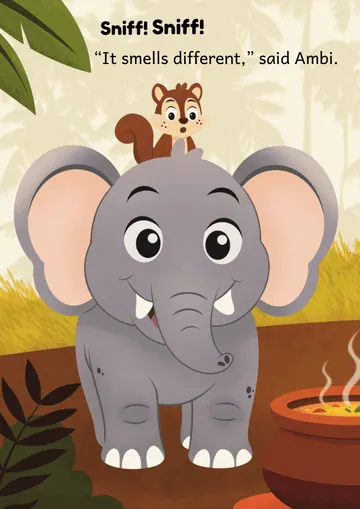
Trunk full of Sambar: Ambi the elephant sniffs a pot of sambar. It smells different. 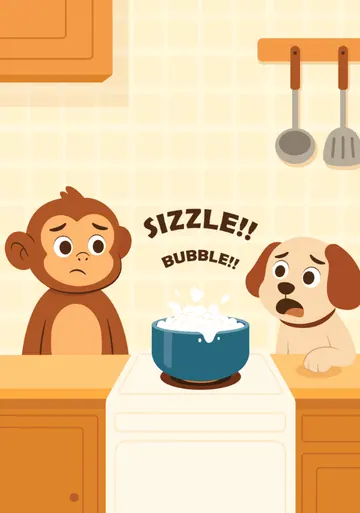
Hob and Cheese: Hob the monkey and Toto the puppy watch the milk on the stove. SIZZLE! BUBBLE! 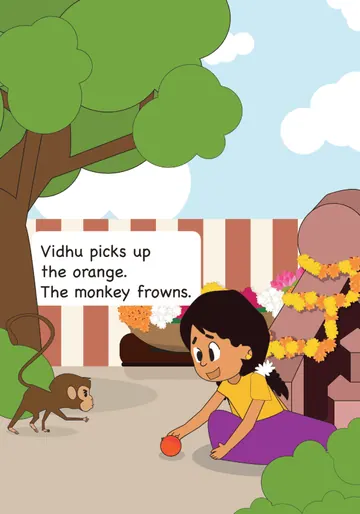
An Orange to Share: Vidhu finds a bright orange at the temple, and a monkey wants it too.


Fall in love with stories. Fall in love with food.

Inside every book
A story first, then things to do together
Every book begins with the story, to read aloud. Then come pages to do together: matching, sequencing, finding hidden things, and “Food for Thought” questions to talk about.
One page in Trunk full of Sambar asks your child to be brave like Ambi and try a new food this week, then draw it. Reading time turns into talking time.
Happy children, happy parents
We hope it helps at yours
It helped at their own tables, and we hope it helps at yours: a little more curiosity, a little less coaxing, and a meal everyone enjoys.
Start with a food your child already loves, or one that is still new.


